Analyse actual media products and practise original creation. Quick checks support concepts; use PLC tasks for evidence-led analysis and practical demonstration.
Revise the key ideas
Format and public service
Chosen episode — OCR requires a standard Radio 1 Live Lounge episode from September 2017 onwards, including a British artist and interviews or chat promoting British music. A special feature episode does not satisfy that selection. Record the centre's chosen artist, date and complete episode; an isolated online song clip is not the whole required product.
BBC ownership and funding — Radio 1 is part of the BBC. Public funding and public-service obligations distinguish it from advertising-funded commercial stations. Explain how support for music, cultural activity and audience provision relates to the selected programme. The licence-fee amount and detailed policy can change; use dated sources for numerical claims.
Public-service distinctiveness — Live Lounge offers artist performance, covers and conversation that can support creativity and introduce music to listeners. The format can demonstrate distinctiveness alongside popular entertainment. Popular artists are not automatically incompatible with public service; evaluate the particular content and its contribution.
Production roles — Presenters, producers, researchers, sound engineers and performers contribute different tasks. Booking, rehearsal, questions, equipment and mixing make the programme possible. Informal conversation can be planned without every word being scripted. Distinguish the station, programme team and artist rather than calling them a single producer.
Regulation — Ofcom's broadcast standards include harm, offence, fairness and protections relevant to scheduling and audience. The BBC also has public-service obligations. Online clips and broadcast programmes have different distribution contexts. Explain a relevant content or scheduling decision; regulation does not mean that no listener can object to a programme.
Distribution and industry
Radio distribution — A scheduled broadcast provides shared timing; digital radio and online services extend access; catch-up offers convenience. Examine the actual episode's availability and platform at the time studied. Do not assume all material remains available indefinitely or that every audience has the same devices and connection.
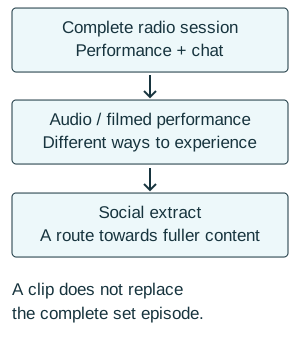
Convergence — A Live Lounge performance may circulate as sound, filmed performance and social clips. These formats link the station brand to artists and offer several routes into the programme. A social extract can attract attention without reproducing the complete episode. Explain what each platform contributes.One session can reach users through several formats. Original teaching schematic.
Competition and promotion — Commercial stations, streaming services and other entertainment compete with Radio 1. Artist access, presenter identity and distinctive sessions can encourage use. Promotion benefits the artist and station, while the programme may still serve public purposes. Do not equate audience popularity with automatic fulfilment of every public-service aim.
Technology and professional control — Microphone placement, balance and sound mixing make voices and instruments intelligible. Video adds visible musicianship and performer interaction. A recording can be edited for later distribution; describe the version studied rather than assuming every uploaded session is identical to its broadcast.
Audiences and evidence
Targeting — Radio 1 targets young audiences, commonly described by the BBC as 15–29, while reaching listeners outside that range. Music selection, presenter style and platform use can support targeting. Intended audience and actual audience differ. Use a dated BBC source if quoting demographic measurements.
Mode of address — Presenter language, humour, questions and interaction can address listeners as knowledgeable peers. Explain a located example from the complete episode. Informality is constructed through choices and does not mean all listeners feel included or that the presenter is speaking without institutional constraints.
Gratifications — Listeners can enjoy music, learn about an artist, recognise tastes or share a session with friends. An unusual cover may supply novelty and comparison; an interview may supply information and identity. Identify the feature and the need rather than assigning every benefit to the programme automatically.
Audience measurement — Radio research can estimate weekly reach and listening time; a video's views measure a different activity. A person may use several platforms and be counted in several metrics. Explain the measure and date before comparing figures. A high view count alone does not reveal who listened to the full episode.
Participation — Listeners may comment, message, share or discuss performances through associated platforms. Producers still select content and manage access. Participation can strengthen a community or promote a clip but does not guarantee that every response influences the broadcast or represents the whole audience.
Contexts and judgement — Supporting British artists links the format to cultural production; debates about BBC value concern funding, distinctiveness and service to audiences. Weigh programme evidence rather than simply labelling public funding good or bad. PLC demonstration needs the selected complete episode and a justified explanation.
Test yourself
30 questions · Random sets of 10. These quick checks support revision; practise longer explanations and justified judgements too.
Mind map
Use the branches to recall the ideas and explain their connections. Check the revision notes for the full detail.
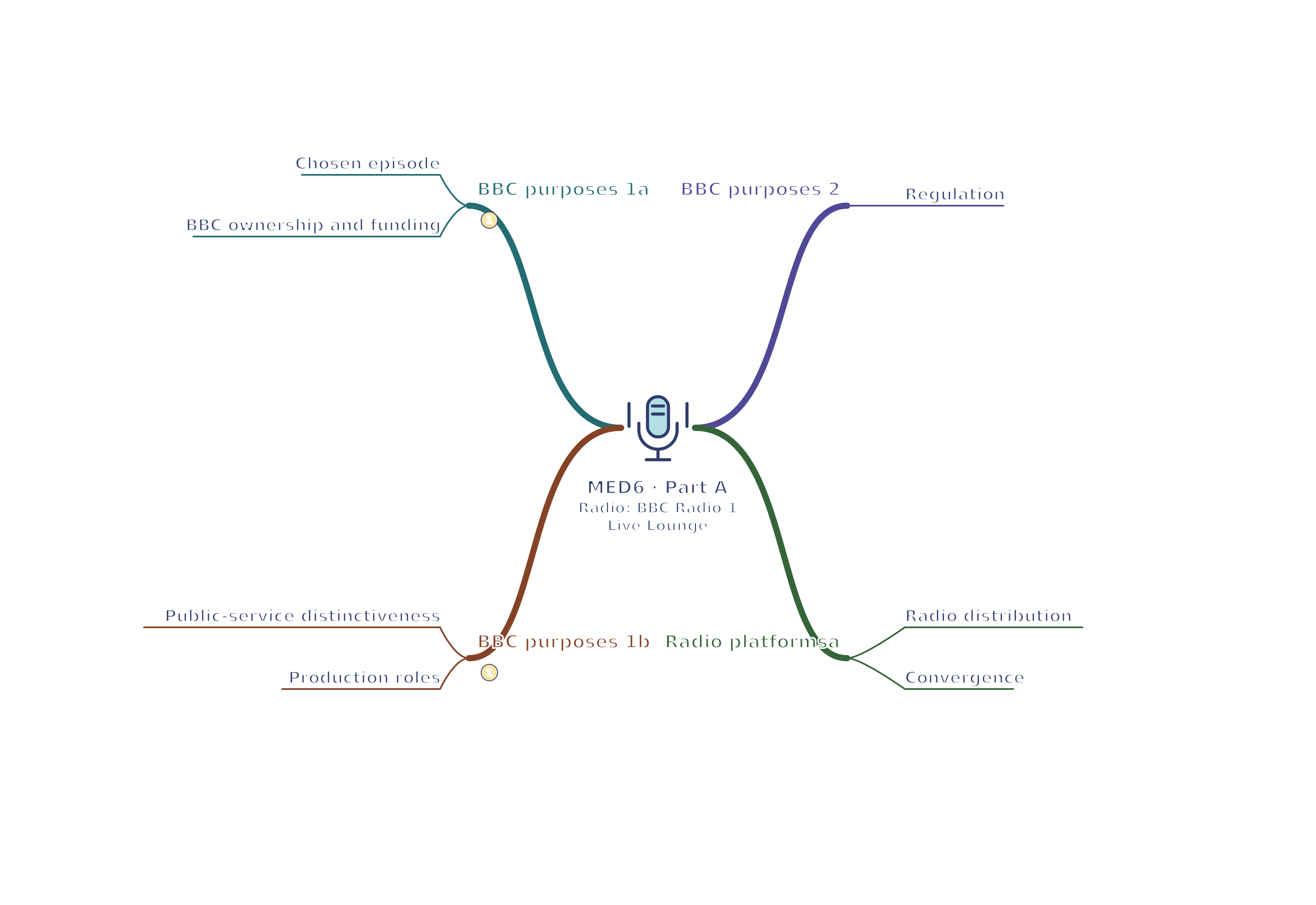
MED6 · BBC purposes 1a / BBC purposes 1b / BBC purposes 2 / Radio platformsa
View MED6 · BBC purposes 1a / BBC purposes 1b / BBC purposes 2 / Radio platformsa mind mapOpen the full-size map to zoom. Download the PDF to print on A4 or enlarge to A3.
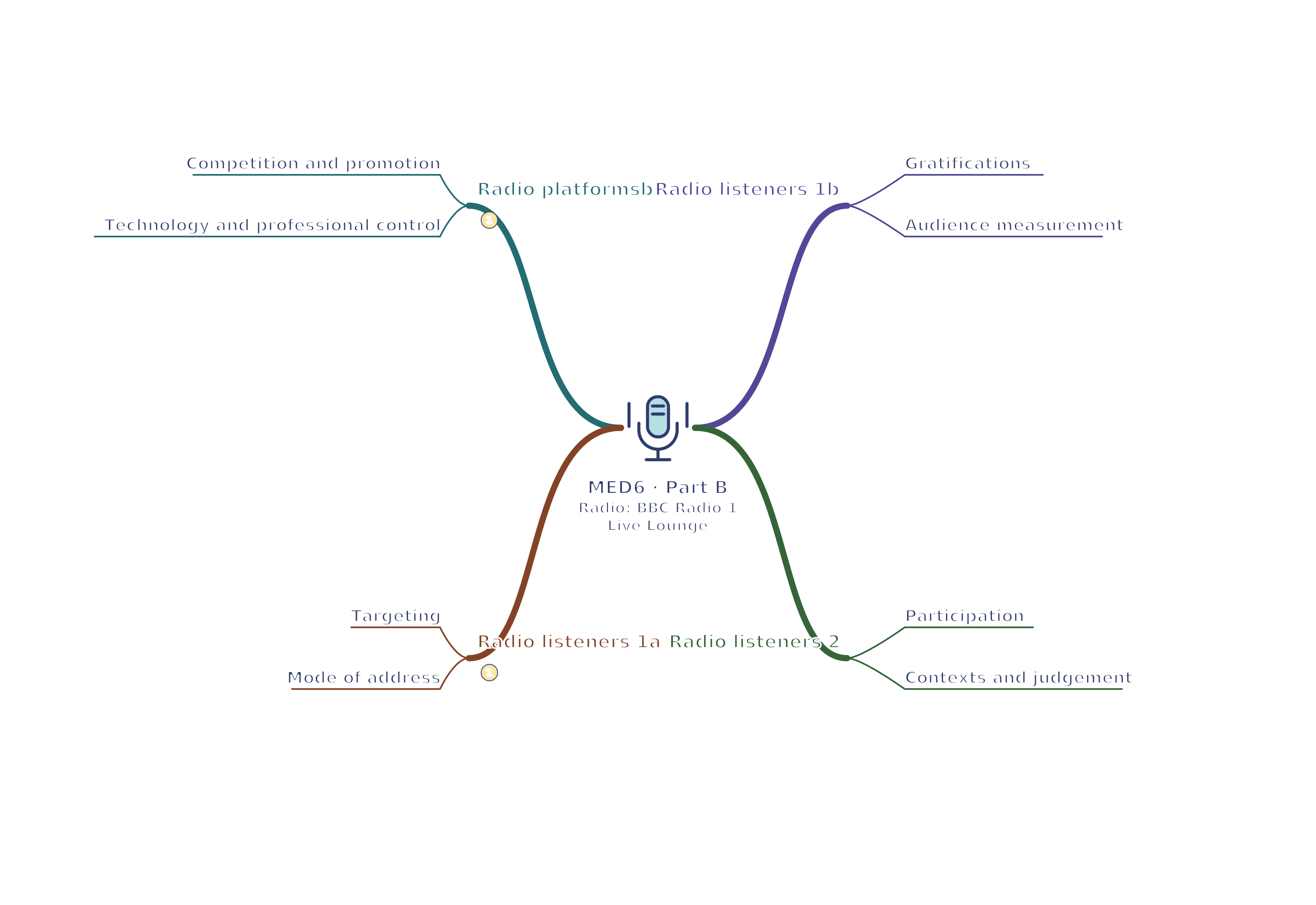
MED6 · Radio platformsb / Radio listeners 1a / Radio listeners 1b / Radio listeners 2
View MED6 · Radio platformsb / Radio listeners 1a / Radio listeners 1b / Radio listeners 2 mind mapOpen the full-size map to zoom. Download the PDF to print on A4 or enlarge to A3.
Chosen episode: Use a standard complete Live Lounge with a British artist
BBC ownership and funding: Public service differs from commercial radio
BBC purposes 1b
Public-service distinctiveness: Live performance can develop and showcase music
Production roles: Preparation and technical work support apparent informality
BBC purposes 2
Regulation: Ofcom standards and BBC obligations shape output
Radio platformsa
Radio distribution: Broadcast listening and on-demand access serve different needs
Convergence: Audio performance can become video and social content
Radio platformsb
Competition and promotion: Stations compete for attention as well as reach
Technology and professional control: Recording and mixing affect the listening experience
Radio listeners 1a
Targeting: Radio 1's youth focus shapes selection and address
Mode of address: Informality can construct familiarity with listeners
Radio listeners 1b
Gratifications: Performance, information and conversation offer different benefits
Audience measurement: Reach is different from hours and online views
Radio listeners 2
Participation: Sharing and response can extend a broadcast
Contexts and judgement: Explain how music provision fits cultural and political debate
Connections
BBC purposes 1a → BBC purposes 1b: Public service reaches listeners across platforms
Part connections
MED6 · BBC purposes 1a / BBC purposes 1b / BBC purposes 2 / Radio platformsa: BBC purposes 1a → BBC purposes 1b — Public service reaches listeners across platforms
MED6 · Radio platformsb / Radio listeners 1a / Radio listeners 1b / Radio listeners 2: Radio platformsb → Radio listeners 1a — Public service reaches listeners across platforms
 Mr Kidman's Classroom