Analyse actual media products and practise original creation. Quick checks support concepts; use PLC tasks for evidence-led analysis and practical demonstration.
Revise the key ideas
Cover language
Required MOJO material — Use two centre-selected MOJO covers and a complete edition from September 2017 onwards, excluding special editions. Covers must show artist imagery, masthead, main coverline, other coverlines and selling lines. Read the complete edition for industry and audience evidence, including advertising and articles. These notes do not invent the centre's selected issues.
Masthead and branding — The masthead is the publication's prominent name. Its typography, scale and placement help establish identity across issues. Image overlap can imply that established readers recognise the title even when partly obscured. Explain what is actually visible on a selected cover rather than assuming every issue has the same overlap.
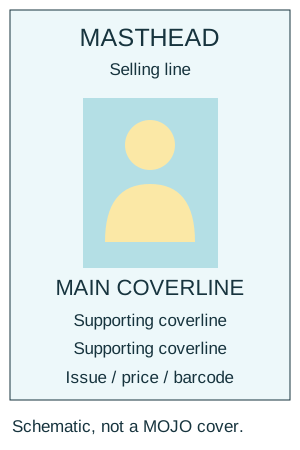
Coverline hierarchy — The main coverline links to the featured artist or principal story; smaller lines offer additional reasons to buy. Contrast, colour and arrangement create a reading path. Selling lines promise benefits or position the magazine. Analyse how written and visual choices work together, not simply how many coverlines appear.An original generic cover shows information hierarchy. Original teaching schematic.
Photography and star persona — A direct gaze can invite a relationship with the reader; low-key lighting or a serious expression may suggest intensity or authenticity. Clothing and props can cue musical identity. These are interpretations supported by context, not universal meanings. A portrait represents a selected persona rather than the whole person.
Typography and colour — House style is a repeated design identity, including type, palette and layout. Contrasting fonts can separate branding, main stories and secondary information. A restrained palette may suggest seriousness while brighter accents highlight offers. Check legibility and the relation to the artist's image before attributing an audience effect.
Anchorage and selection — Anchorage uses text to narrow or steer an image's possible meanings. Calling an artist a legend can position them as important before the reader sees the article. Cropping, quotation and exclusion also shape meaning. Examine which histories and performers are prioritised and which are absent.
Representation and culture
Musical authority — MOJO commonly positions itself around knowledgeable engagement with established music and its history. Detailed interviews, critical reviews and archive material can value expertise and longevity. Find evidence in the chosen edition. The category of authentic music is a constructed value judgement, not an objective measure excluding other tastes.
Artist identities — Analyse how selected artists are framed through expression, costume, writing and prominence. A mature performer may be celebrated for experience rather than youth. Compare treatment of different genders or genres with evidence and avoid drawing conclusions about the entire magazine from a single image.
Stereotypes and omissions — Ask who gets to speak, who is framed as expert and which groups are included. A narrow range of cover stars may privilege particular histories, while individual articles may complicate that pattern. An absence on one cover is a limited observation; stronger claims require a wider sample.
Audience readings — Fans may appreciate the celebration of familiar artists; others may question whose musical heritage is prioritised. Explain a preferred and alternative reading using the same design or editorial evidence. Audience interpretation depends on knowledge and experience rather than an automatic response shared by all older readers.
Social and cultural contexts — The magazine's interest in established artists can connect to nostalgia, collecting and the economic circumstances of readers who buy specialist print. Use these contexts to explain editorial and advertising choices. Do not treat an old demographic profile as a current statistic or assume all fans have similar incomes.
Industry and readership
Ownership in context — OCR uses Bauer as its ownership case in discussing MOJO and the wider magazine industry. Check the imprint and dated media pack for the edition studied. A publisher's portfolio can share production, sales and promotion while preserving a specialist title's identity. Ownership facts should be attached to a date, not assumed permanent.
Commercial funding — Cover price and subscriptions bring reader income; advertisements sell access to a selected readership. Editorial content can make the product attractive to both parties. A print copy, digital edition and subscriber offer may be priced differently. Advertising and editorial have different purposes even when both appeal to music enthusiasts.
Audience segmentation — MOJO targets a more specialised audience than a general mass entertainment product. Age, musical interests, spending habits and identity can guide decisions. A stated target differs from actual readership; demographic data needs its source and date. Use observable content and advertising as evidence of targeting without inventing precise percentages.
Circulation and readership — Circulation counts copies distributed or sold under the relevant measurement rules; readership estimates people reading, including shared copies. Subscription numbers, website visits and social followers are different measures again. They cannot be added as if each represented a unique person.
Diversification and digital change — Websites, digital editions, social activity and special products can diversify income and audience contact. Digital distribution may reduce some physical costs but introduces competition and platform dependence. Study actual channels associated with the chosen period rather than assuming a website reproduces the whole magazine for free.
Regulation and ethics — Accuracy, privacy, defamation and copyright matter to print publishing. Check the publisher's stated complaints route and relevant code; do not assume Ofcom regulates a print magazine. Codes and law can influence reporting and photography, but do not prescribe a reader's interpretation of a cover.
Gratifications and address — Reviews and interviews provide information; musical tastes support personal identity; discussion offers social interaction; features and collections provide enjoyment. Locate examples in the full edition and explain tone, assumed knowledge and reader relationship. A confidence quiz cannot replace analysing the actual covers and articles.
Test yourself
30 questions · Random sets of 10. These quick checks support revision; practise longer explanations and justified judgements too.
Mind map
Use the branches to recall the ideas and explain their connections. Check the revision notes for the full detail.
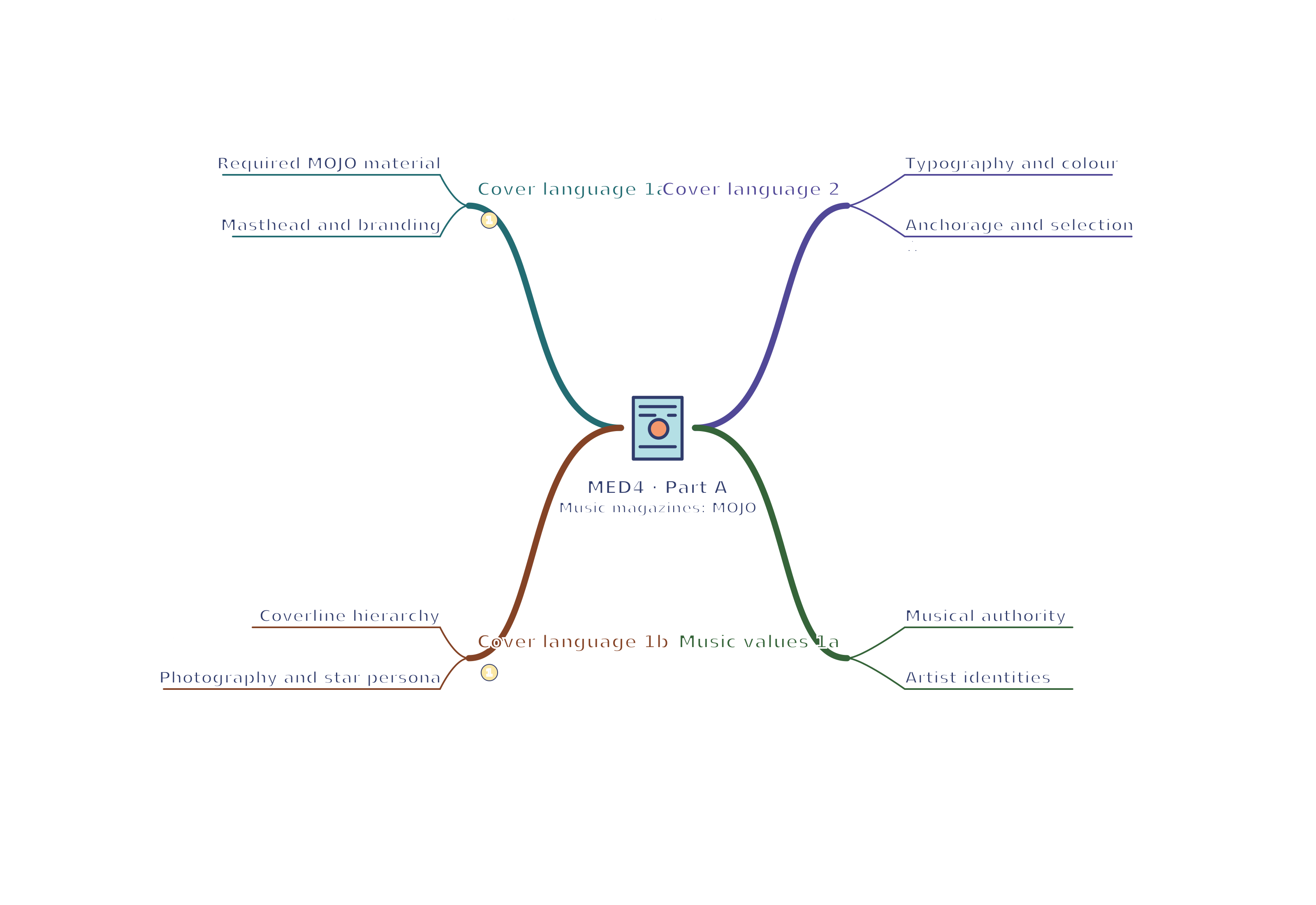
MED4 · Cover language 1a / Cover language 1b / Cover language 2 / Music values 1a
View MED4 · Cover language 1a / Cover language 1b / Cover language 2 / Music values 1a mind mapOpen the full-size map to zoom. Download the PDF to print on A4 or enlarge to A3.
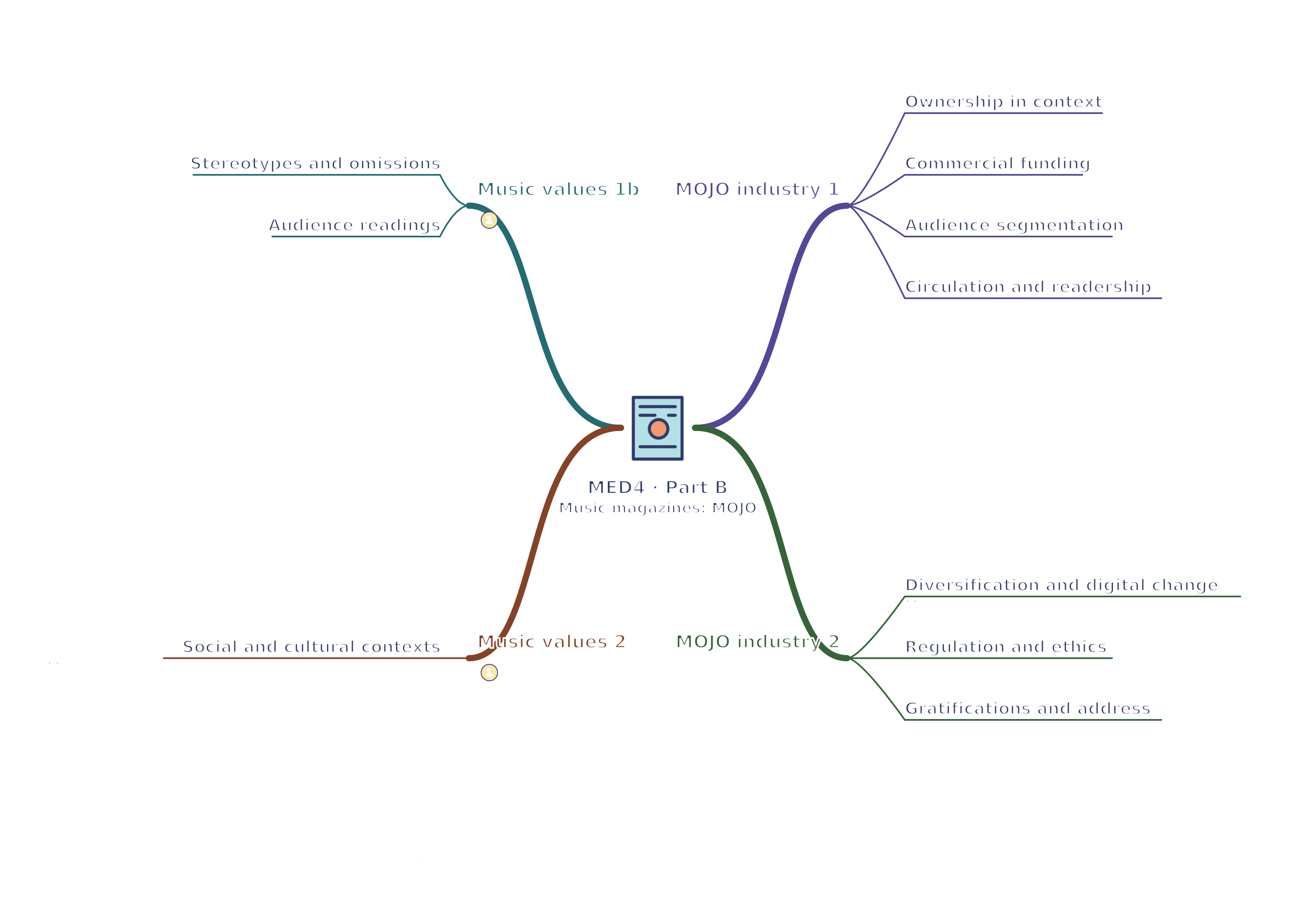
MED4 · Music values 1b / Music values 2 / MOJO industry 1 / MOJO industry 2
View MED4 · Music values 1b / Music values 2 / MOJO industry 1 / MOJO industry 2 mind mapOpen the full-size map to zoom. Download the PDF to print on A4 or enlarge to A3.
Required MOJO material: Two standard covers and one complete standard edition
Masthead and branding: A repeated title supports recognition
Cover language 1b
Coverline hierarchy: Scale and position prioritise stories
Photography and star persona: Pose, gaze and lighting construct an artist
Cover language 2
Typography and colour: A house style connects individual issues
Anchorage and selection: Words can direct the reading of an image
Music values 1a
Musical authority: Expert writing and heritage can construct authenticity
Artist identities: Representation can connect age, gender and musical value
Music values 1b
Stereotypes and omissions: Visibility and agency matter alongside appearance
Audience readings: A heritage identity can invite both recognition and criticism
Music values 2
Social and cultural contexts: Musical memory intersects with buying power and identity
MOJO industry 1
Ownership in context: Distinguish the publisher of the studied edition from later arrangements
Commercial funding: Sales, subscriptions and advertising support production
Audience segmentation: A specialist music interest defines a niche
Circulation and readership: Copies sold differ from people who read
MOJO industry 2
Diversification and digital change: Multiple channels can extend a print identity
Regulation and ethics: Press standards and legal responsibilities affect magazines
Gratifications and address: Specialist content can reward knowledge and participation
Connections
Cover language 1a → Cover language 1b: Cover choices communicate values to readers
Part connections
MED4 · Cover language 1a / Cover language 1b / Cover language 2 / Music values 1a: Cover language 1a → Cover language 1b — Cover choices communicate values to readers
MED4 · Music values 1b / Music values 2 / MOJO industry 1 / MOJO industry 2: Music values 1b → Music values 2 — Cover choices communicate values to readers
 Mr Kidman's Classroom