Analyse actual media products and practise original creation. Quick checks support concepts; use PLC tasks for evidence-led analysis and practical demonstration.
Revise the key ideas
Interpreting and planning the brief
Our production route — The school's chosen print route is a magazine cover plus a double-page spread. Use the live OCR brief for the certification year to confirm genre, audience, purpose, prescribed content, image and word requirements and permitted material. This unit teaches transferable planning and production; it does not invent the live assignment or provide a completed assessed product.
Brief breakdown — Separate mandatory deliverables from your creative choices. Record the specified audience and purpose, content restrictions, production requirements and submission arrangements. Check every requirement with the actual brief before production. Extra pages or length do not automatically gain marks; work outside the stated scope cannot substitute for required content.
Research with a purpose — Study several relevant covers and spreads for hierarchy, type, image, voice and representation. Explain how their choices address audiences and decide which principles suit your brief. Research supports a new production, not copying a professional layout or article. Keep source references and distinguish research images from original production assets.
Audience and concept — Define the brief's intended reader and the benefit your magazine offers. Choose a genre, tone and angle that serve the required purpose. Audience needs should shape stories, design and representation; a broad age label alone does not establish a concept. Do not change the brief's specified audience merely because another would be easier to photograph.
Flatplans and schedule — Sketch the cover and two-page spread, deciding focal image, story hierarchy, columns and relationship across the gutter. Plan photographs, permissions, drafting and production time. A flatplan is a layout plan, not the final product. OCR indicates approximately 25–30 hours of lesson time for the NEA; follow the centre's supervised schedule. Allow time to test readability and exported files without treating planning volume as a substitute for quality.
Statement of Intent — OCR requires an approximately 250–300-word Statement of Intent alongside the production. Explain how planned image, typography, composition and written voice will convey meaning and construct representations for the intended audience. Make your own specific choices visible; avoid a generic description of magazines or a promise that the final work will automatically earn high marks.
Cover production
Cover hierarchy — Use masthead, main coverline, supporting coverlines and selling information as required by the live brief. Vary scale and position to guide attention and connect the main coverline to the principal image. Keep text readable over the photograph. A professional-looking surface is useful only when its meaning and audience address suit the brief.
Original photography — Plan location, pose, costume, props and camera position to construct the desired persona. Take alternative framings and check sharpness and lighting. Obtain appropriate consent and follow school arrangements. The live brief determines original-image requirements; do not assume a web image or generated portrait can replace your own required production evidence.
Typography and colour — Choose complementary type styles with a clear hierarchy and consistent palette. Test contrast, size and spacing at final scale. A decorative font can suit a masthead but hinder continuous reading. Colour should support identity and separation without being the only cue distinguishing information.
Cover composition — Leave planned areas for text, avoid accidental tangencies and use alignment to connect elements. A focal point helps viewers decide where to look first. Empty space can organise meaning rather than indicate unfinished work. Overcrowding every gap can weaken the main story and obscure the photograph.
Double-page spread
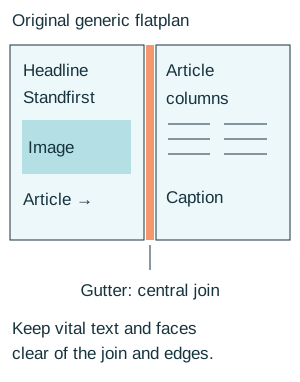
Spread structure — Use a coherent headline, standfirst, article body, images, captions and page furniture where appropriate to the brief. The gutter is the central join; keep important text and faces clear of it. Plan the reading route across both pages and preserve each page's safe margins rather than simply stretching one page sideways.Facing pages need a reading path and a safe gutter. Original teaching schematic.
Columns and alignment — Columns give manageable line lengths and guide reading; consistent alignment connects headline, article, pictures and captions. Avoid narrow measures with awkward breaks or text trapped between images. A baseline/grid is a tool for consistency, not a requirement to make every element the same size.
Article voice and content — An interview, profile or feature needs an engaging angle, relevant information and coherent progression. Match register and assumed knowledge to the reader and genre. Proofread names, punctuation and claims. Do not fabricate a real interview or attribute invented quotations to a real person; fictional practice material must be clearly identified.
Pull quotes and captions — A pull quote highlights a meaningful extract from the article; a caption identifies or interprets a picture. Use them to aid entry and understanding, checking that quotations match your actual text. They do not replace the article body or justify decorative text too small to read.
Continuity across the product — Use consistent branding, palette and voice while allowing the spread its own hierarchy. If the cover promises a particular feature, the spread should deliver that angle. Meaningful continuity helps the magazine feel like a single product; identical layouts on every page are unnecessary.
Representation, refinement and submission
Constructing representation — Review pose, gaze, cropping, descriptions and voice to see how subjects are positioned. Decide whether you use, complicate or challenge a convention, and consider who is missing. Avoid unintentional stereotypes and unsupported claims. An inclusive intention needs visible choices in the product, not only an assertion in the Statement of Intent.
Editing and quality control — Check image resolution, unwanted backgrounds, spelling, alignment, contrast and hierarchy. Crop or retouch purposefully without misleadingly changing represented events. Compare revisions with the brief and intended reading; do not judge solely by whether a design looks more elaborate.
Feedback and own decisions — Follow the teacher's current supervision and assistance arrangements. Practise general skills before assessed production and retain evidence of your own decisions. Do not rely on another person's finished article, design or AI output as your own assessed work. Record any permitted sources or AI use transparently under the current OCR and centre rules.
Export and submission — Follow the required formats and naming, embed or preserve assets as instructed, and check the exported cover and spread for missing fonts, image quality, page size and readable text. Submit the compulsory Statement of Intent and required authentication evidence. A correct project file does not guarantee a correct export.
Assessment and PLC evidence — Creating media assesses the application of media language and representation for the intended audience. A checklist or vocabulary quiz cannot certify an original, effective finished product. Demonstrate broader goals with your own research, plan, photographs, writing, production and explanation, under teacher judgement and the live brief.
Test yourself
30 questions · Random sets of 10. These quick checks support revision; practise longer explanations and justified judgements too.
Mind map
Use the branches to recall the ideas and explain their connections. Check the revision notes for the full detail.
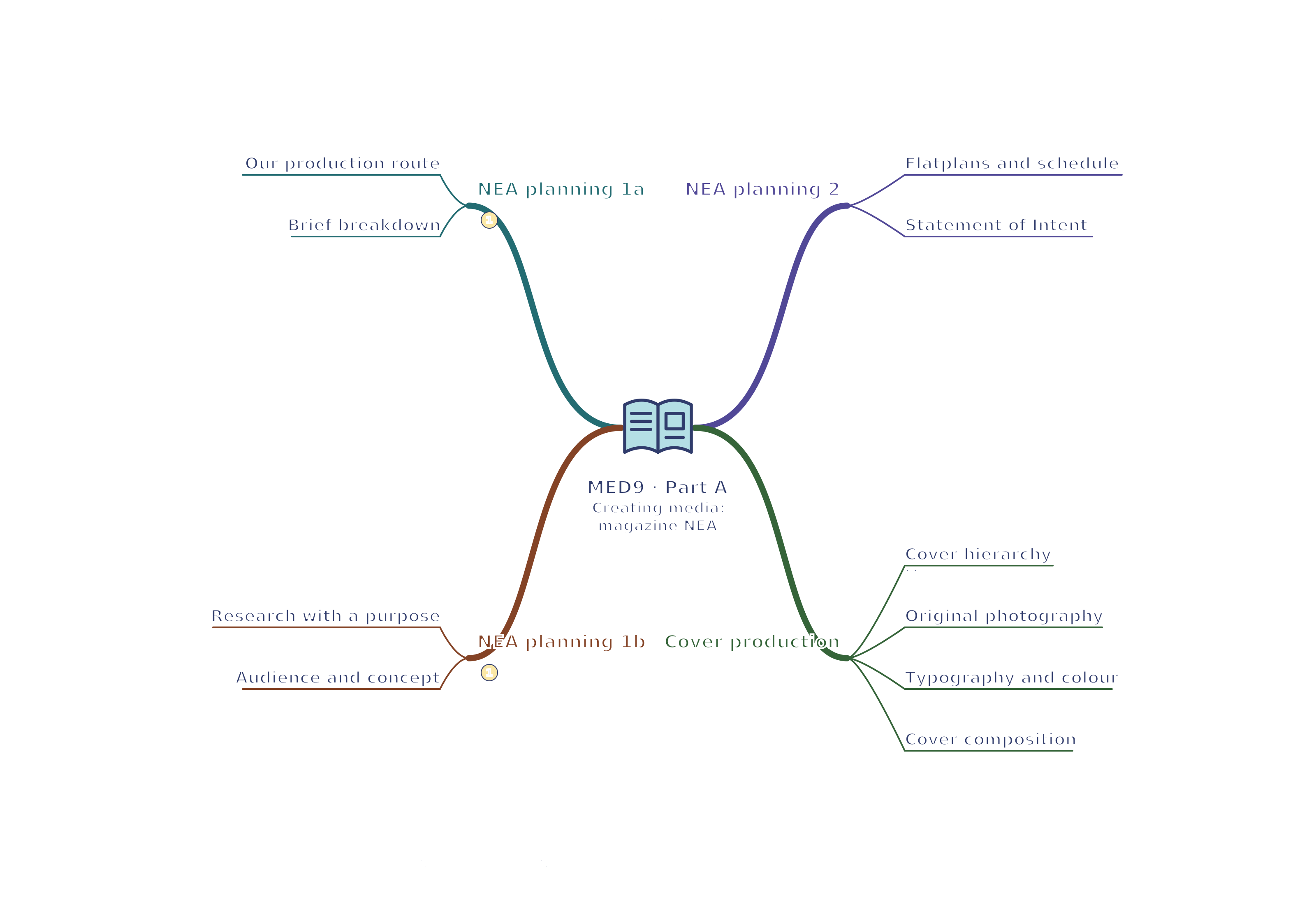
View MED9 · NEA planning 1a / NEA planning 1b / NEA planning 2 / Cover production mind mapOpen the full-size map to zoom. Download the PDF to print on A4 or enlarge to A3.
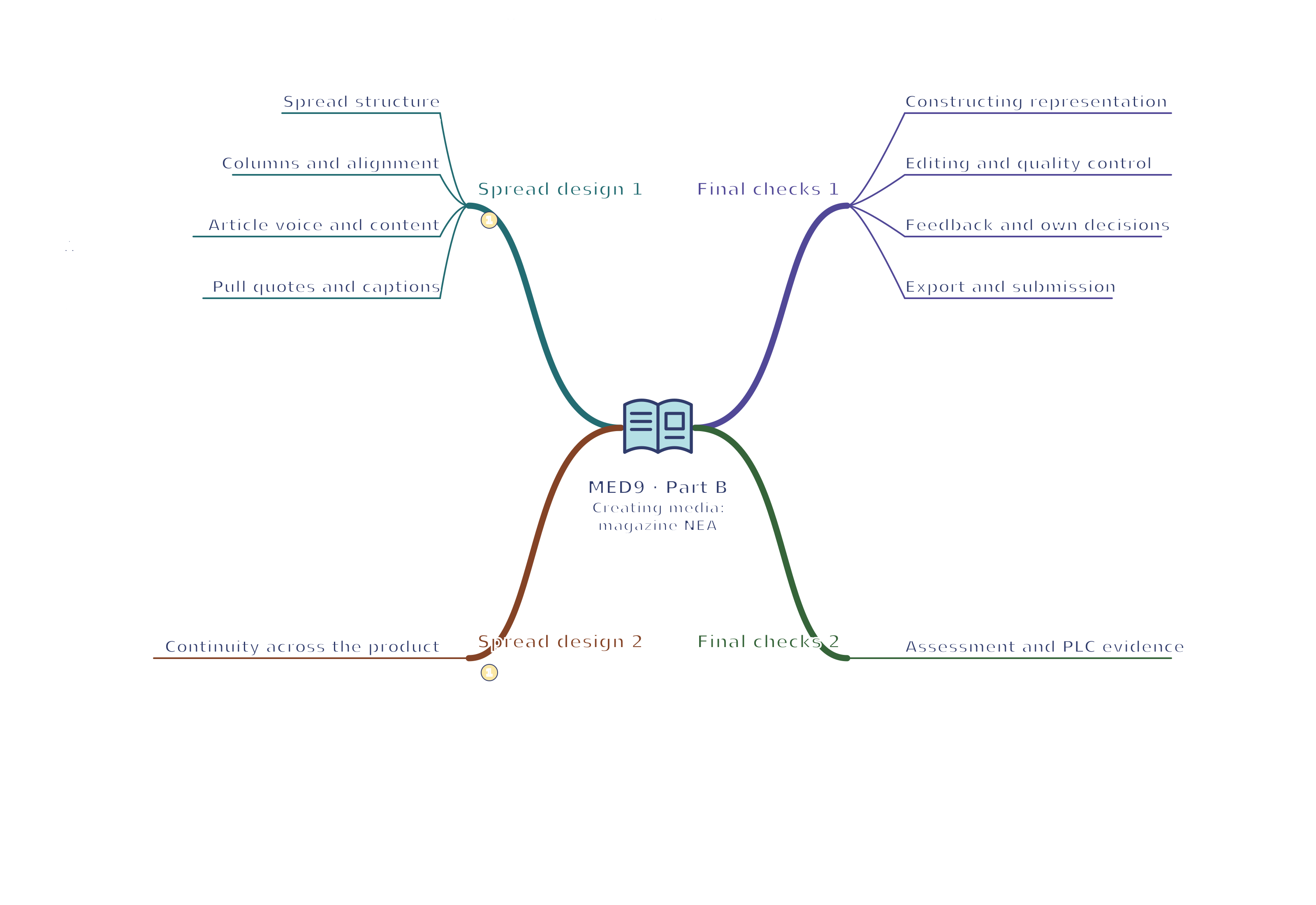
MED9 · Spread design 1 / Spread design 2 / Final checks 1 / Final checks 2
View MED9 · Spread design 1 / Spread design 2 / Final checks 1 / Final checks 2 mind mapOpen the full-size map to zoom. Download the PDF to print on A4 or enlarge to A3.
 Mr Kidman's Classroom