Analyse actual media products and practise original creation. Quick checks support concepts; use PLC tasks for evidence-led analysis and practical demonstration.
Revise the key ideas
Online language and representation
Required online material — OCR requires The Observer homepage and at least one other page, following several article and journalist links, alongside its X and Instagram feeds. Online and social material must date from September of the first year of the course onwards. For the route first assessed in 2027 use observer.co.uk and the post-sale feeds identified by OCR; legacy Guardian-hosted material belongs to the earlier route.
Interface hierarchy — Digital news uses a logo, sections, cards, links, timestamps and prompts to direct users. Screen size can change hierarchy and visible content. Explain the particular page and device view, distinguishing editorial design from a platform's interface. A screenshot is a dated selection, not a permanent map of the website.
Hyperlinks and multimedia — Links connect background, journalists and related reports; embedded video and audio can add modes of communication. These features allow non-linear use while editorial placement still guides discovery. Not all users follow links, and extra formats do not automatically make a report more accurate or more balanced.
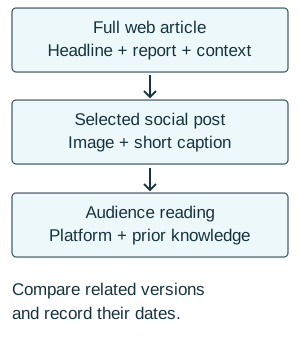
Framing and anchorage — Selection, cropping, headline language and captioning can emphasise blame, urgency or sympathy. Compare a homepage teaser with its full article and a social post about the same event. A short social caption can foreground a different angle, but a difference in length alone does not establish deliberate distortion.Compare meaning as an article becomes a social teaser. Original teaching schematic.
Representation and ideology — Ask who is quoted, pictured, named and allowed explanation. Compare treatment of social groups and the values suggested by repeated choices. Claims about ideology need a pattern of evidence, with attention to genre and attributed speech. The same story may support different readings across platforms.
Ownership and digital business
Cohort and ownership — OCR's update directs teaching from September 2025 to The Observer under Tortoise for first assessment in June 2027. It gives observer.co.uk, X observeruk and Instagram theobserveruk as product links. The June 2026 exam uses pre-sale GMG/Scott Trust material. A historical ownership answer is appropriate only with the correct context.
Monetisation — Subscriptions, advertising and other reader or commercial income can support journalism, depending on the studied period's model. A paywall restricts some access; free social teasers can attract users to paid or fuller content. Check actual access prompts before making a claim about what is free.
Convergence and workflow — A newsroom can publish a web article and prepare image, video or quotation posts for social platforms. Brand consistency helps recognition while language changes to fit format and audience behaviour. Convergence does not mean all platforms contain the identical text or that audiences respond identically.
Platform dependence — Search and social services can affect discoverability through ranking, recommendations and moderation. Policy or algorithm changes can alter traffic. Direct visits and subscriptions give different relationships with readers. Avoid claiming a particular algorithm's exact operation without evidence; explain the general dependence and its possible consequences.
Regulatory challenges — Publishers retain legal and editorial responsibilities while platforms have their own moderation arrangements. Fast sharing and cross-border distribution make correction and enforcement harder. A comment is user-generated content, not automatically the publisher's endorsement. Different types of content and service have different obligations.
Audiences and participation
Audience targeting — Serious news, culture and commentary can address readers interested in public affairs. Device access, subscriptions and social feeds may reach different segments. Use page features and dated audience sources rather than assuming that every follower has the same politics, income or age.
Analytics — A page view counts a visit to a page; a unique-user estimate attempts to distinguish users over a period; comments and shares measure some forms of engagement. Repeat visits and multiple devices complicate measurement. None alone establishes careful reading, trust or agreement, and cross-platform totals can double-count people.
Active readings — A user reading an entire article has different information from someone seeing one social headline. Knowledge, values and context can shape acceptance or disagreement. Describe a preferred and an alternative reading using evidence; do not assume that a negative comment reveals the position of all users.
Participatory media — Comments, reposts, likes and user discussion can extend a story's reach and create interaction. Availability differs by platform and period. Producers and platforms still control selection, moderation and interfaces. Participation distributes some activity without necessarily transferring ownership or editorial power to users.
Gratifications and identity — Readers may seek knowledge, civic participation, discussion, cultural enjoyment or identity. A social post can start interaction while a long article supplies detail. Apply each need to evidence; not every user follows a news organisation to agree with it, and entertainment does not make news automatically trivial.
Contexts and comparison — Compare web and social versions of a story, explaining selection, platform conventions and audience address. Place examples in their ownership and event context. Weigh the opportunities of wider access against uneven participation and platform dependence; avoid unsupported claims that digital news is always democratic or always misleading.
Test yourself
30 questions · Random sets of 10. These quick checks support revision; practise longer explanations and justified judgements too.
Mind map
Use the branches to recall the ideas and explain their connections. Check the revision notes for the full detail.
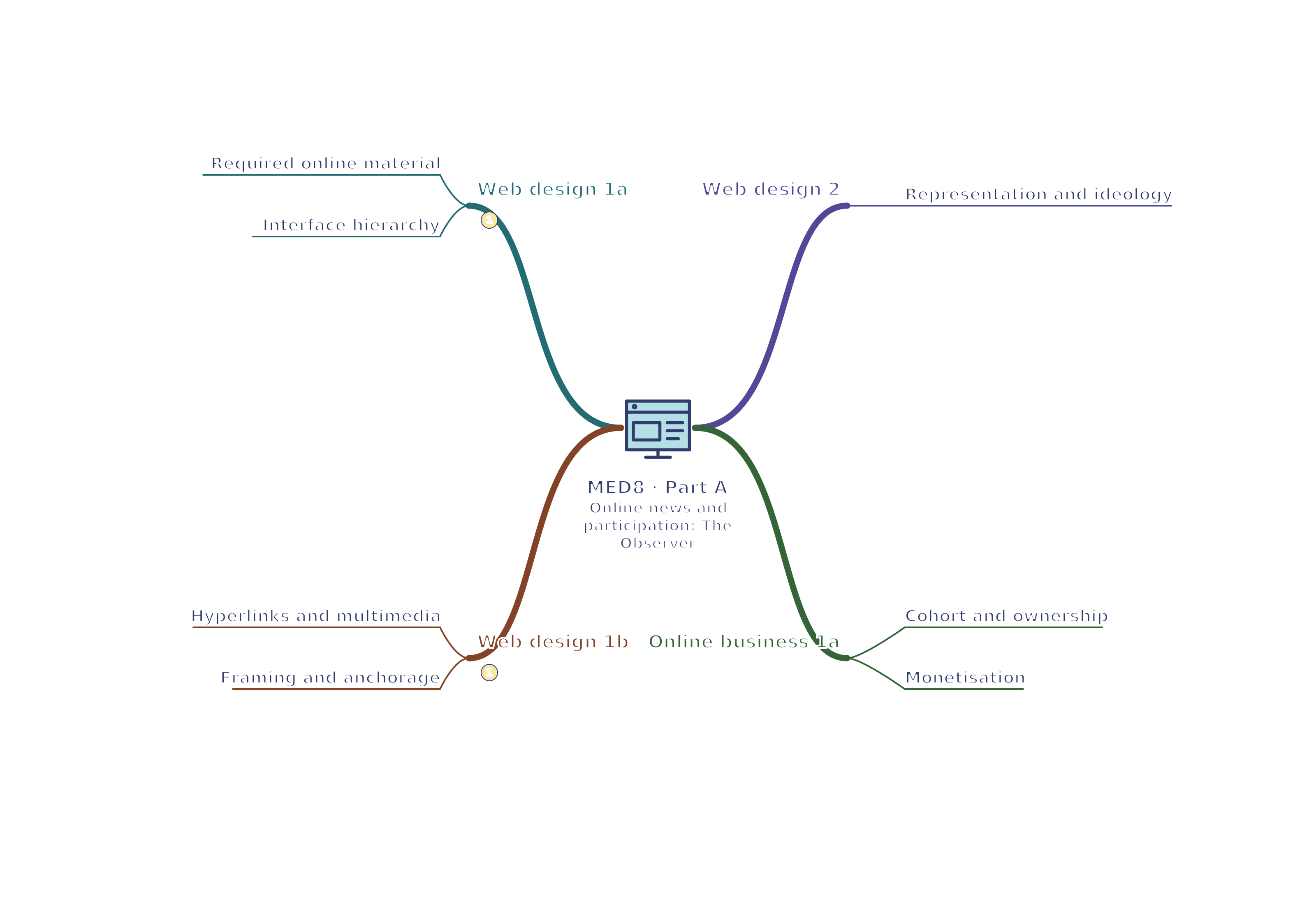
MED8 · Web design 1a / Web design 1b / Web design 2 / Online business 1a
View MED8 · Web design 1a / Web design 1b / Web design 2 / Online business 1a mind mapOpen the full-size map to zoom. Download the PDF to print on A4 or enlarge to A3.
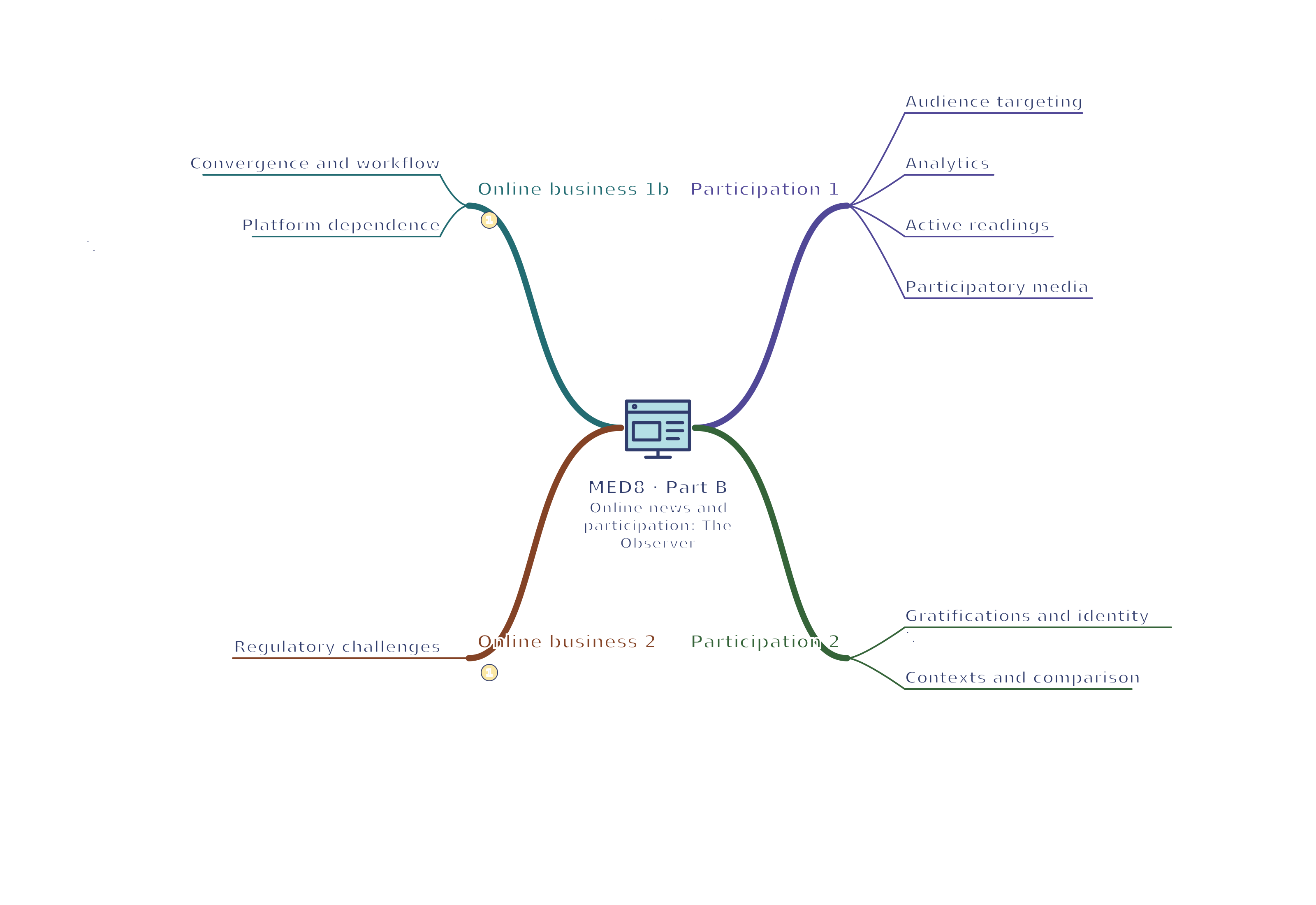
MED8 · Online business 1b / Online business 2 / Participation 1 / Participation 2
View MED8 · Online business 1b / Online business 2 / Participation 1 / Participation 2 mind mapOpen the full-size map to zoom. Download the PDF to print on A4 or enlarge to A3.
Required online material: Study the homepage, another page, articles and social feeds
Interface hierarchy: Headlines, images and navigation organise attention
Web design 1b
Hyperlinks and multimedia: Users can follow several paths through a story
Framing and anchorage: Images and written labels construct a version of events
Web design 2
Representation and ideology: Evaluate agency, visibility and viewpoints
Online business 1a
Cohort and ownership: The 2027 route uses Tortoise's Observer
Monetisation: Digital journalism needs income as well as traffic
Online business 1b
Convergence and workflow: One report can be adapted across several channels
Platform dependence: News producers do not control every route to readers
Online business 2
Regulatory challenges: Speed, borders and user content complicate accountability
Participation 1
Audience targeting: Topics, tone and access offers construct an intended readership
Analytics: Page views, unique users and engagement measure different things
Active readings: Platform and personal experience can change interpretation
Participatory media: Users can circulate and respond within controlled systems
Participation 2
Gratifications and identity: News can inform, connect and support a sense of self
Contexts and comparison: Link political and cultural circumstances to a dated example
Connections
Web design 1a → Web design 1b: Digital design frames news and participation
Part connections
MED8 · Web design 1a / Web design 1b / Web design 2 / Online business 1a: Web design 1a → Web design 1b — Digital design frames news and participation
MED8 · Online business 1b / Online business 2 / Participation 1 / Participation 2: Online business 1b → Online business 2 — Digital design frames news and participation
 Mr Kidman's Classroom