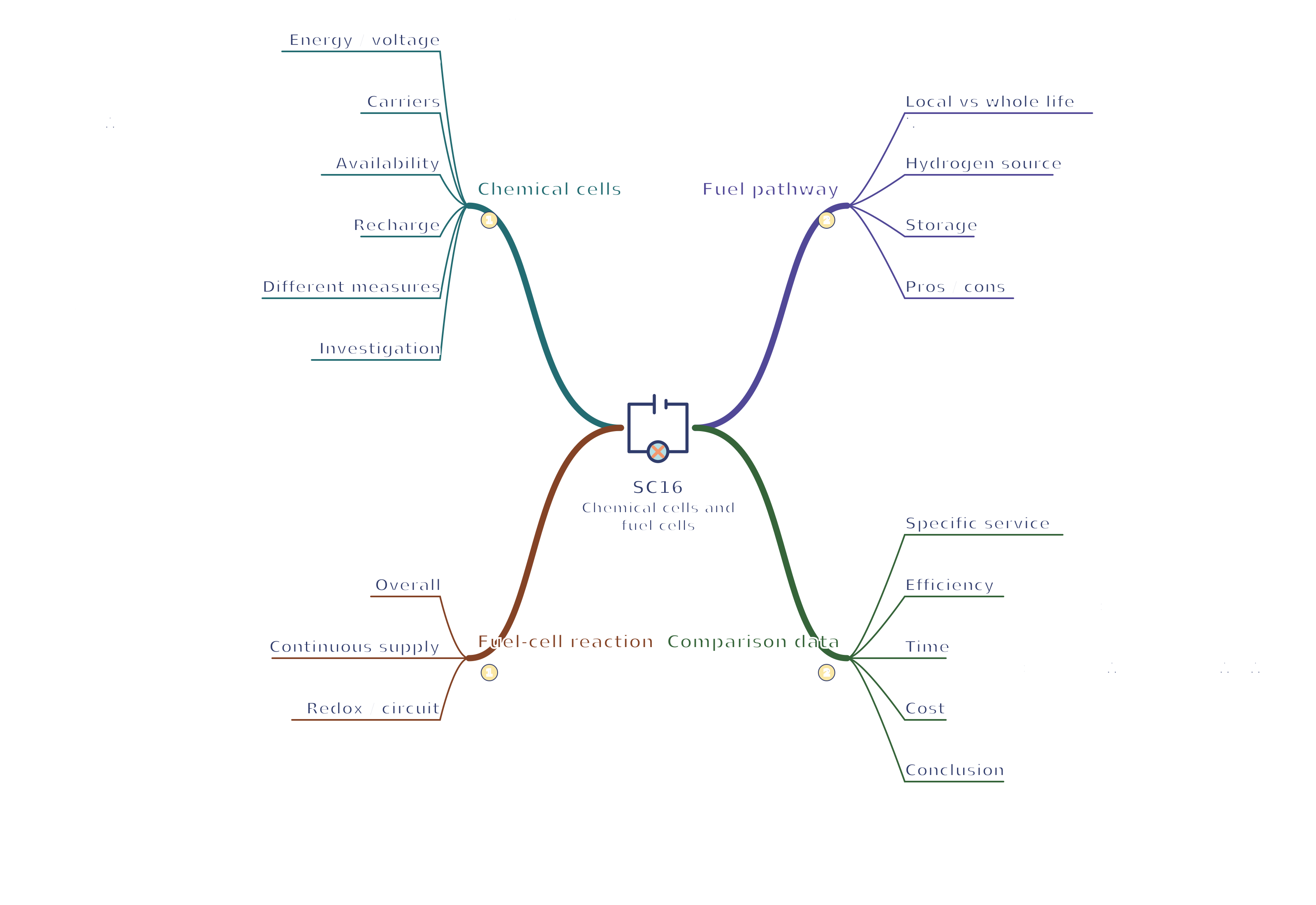
Chemical electricity, hydrogen–oxygen fuel cells and evidence-based comparisons
Revise the key ideas
Chemical cells and rechargeable systems
A chemical cell transfers chemical energy to electrical energy. Reactions at its electrodes produce a potential difference that can drive current through a complete external circuit.
The voltage of a simple cell depends on the electrode materials and electrolyte. Two suitable different metals in an electrolyte can make a cell; the electrolyte lets ions move while electrons travel through the external wire.
A cell supplies a voltage while the required reacting chemicals remain available. When a reactant is exhausted, the original cell reaction can no longer sustain its output; a voltage reading alone does not measure its total stored energy.
In a non-rechargeable cell the useful reaction is not practically reversed during normal use. In a rechargeable cell, an external electrical supply drives reactions that restore reactants; charging needs energy and is not perfectly efficient.
Cells in series can add their voltages if connected in the same orientation. Cell capacity, output power, energy stored, lifetime and voltage are different measures; choose the measure relevant to the device.
Compare cells using operating voltage, useful energy, mass, cost, ability to recharge, safe use and disposal impacts. A lighter cell with a high voltage is not automatically the longest-lasting option.
Investigating a simple cell requires clean electrodes, a consistent electrolyte volume and concentration, controlled temperature and an appropriate voltmeter. Change one factor at a time and repeat readings.
Hydrogen–oxygen fuel cells
A hydrogen–oxygen fuel cell uses a chemical reaction to produce electrical output, with water as its only reaction product: 2H₂ + O₂ → 2H₂O.The overall reaction forms water; the external wire carries electrons.
Unlike a sealed cell with a fixed initial supply, a fuel cell can keep operating while hydrogen and oxygen are supplied and products are removed. It does not need recharging in the same way as a rechargeable battery; it needs fuel.
Hydrogen is oxidised and oxygen is reduced in separate electrode reactions. Electrons pass through the external circuit, supplying electrical energy, while ions move through the electrolyte. Detailed electrode equations depend on the electrolyte used.
Water production at the point of use can reduce local air pollution. There is no carbon dioxide in the hydrogen–oxygen reaction, but hydrogen manufacture, compression, transport and equipment manufacture can still create emissions.
Producing hydrogen by electrolysis needs electricity; making it from fossil fuels can emit carbon dioxide. Compare the whole production pathway rather than describing all hydrogen as automatically carbon-free.
Hydrogen has low density, so useful storage can require compression or cooling. It is flammable, requires suitable containment and infrastructure, and fuel-cell catalysts can be costly.
Advantages can include low local emissions, efficient conversion in appropriate conditions, quiet operation and refuelling. Disadvantages can include fuel-production impacts, storage challenges, infrastructure costs and equipment cost.
Evaluate a fuel cell for a specific use using supplied data: useful energy output, fuel mass, refuelling access, price, range and environmental impacts. A sensible decision can differ between a remote sensor, a bus and a portable phone.
Using comparison data
Efficiency (%) = useful electrical energy output ÷ energy supplied × 100. Be clear which stages you are including (the system boundary). A fuel cell’s efficiency alone does not include energy used to produce and transport its fuel.
For a device supplied with a fixed useful energy, operating time = available useful energy ÷ power. Use joules with watts to obtain seconds, or watt-hours with watts to obtain hours.
Calculate cost per useful unit of energy using comparable inputs. Include replacement or refuelling costs if the question provides them; avoid assuming purchase price alone represents lifetime cost.
Compare emissions over the full pathway and distinguish local exhaust emissions from manufacturing and fuel-production emissions. Conclusions should follow the supplied evidence and acknowledge missing data.
Watch SC16 · Chemical cells and fuel cells · Topic 5 — Separate chemistry 1
Revise chemical cells and fuel cells with this narrated video. Use the player controls to pause, seek, adjust the volume or mute. Turn English captions on or off using the captions menu.
 Mr Kidman's Classroom