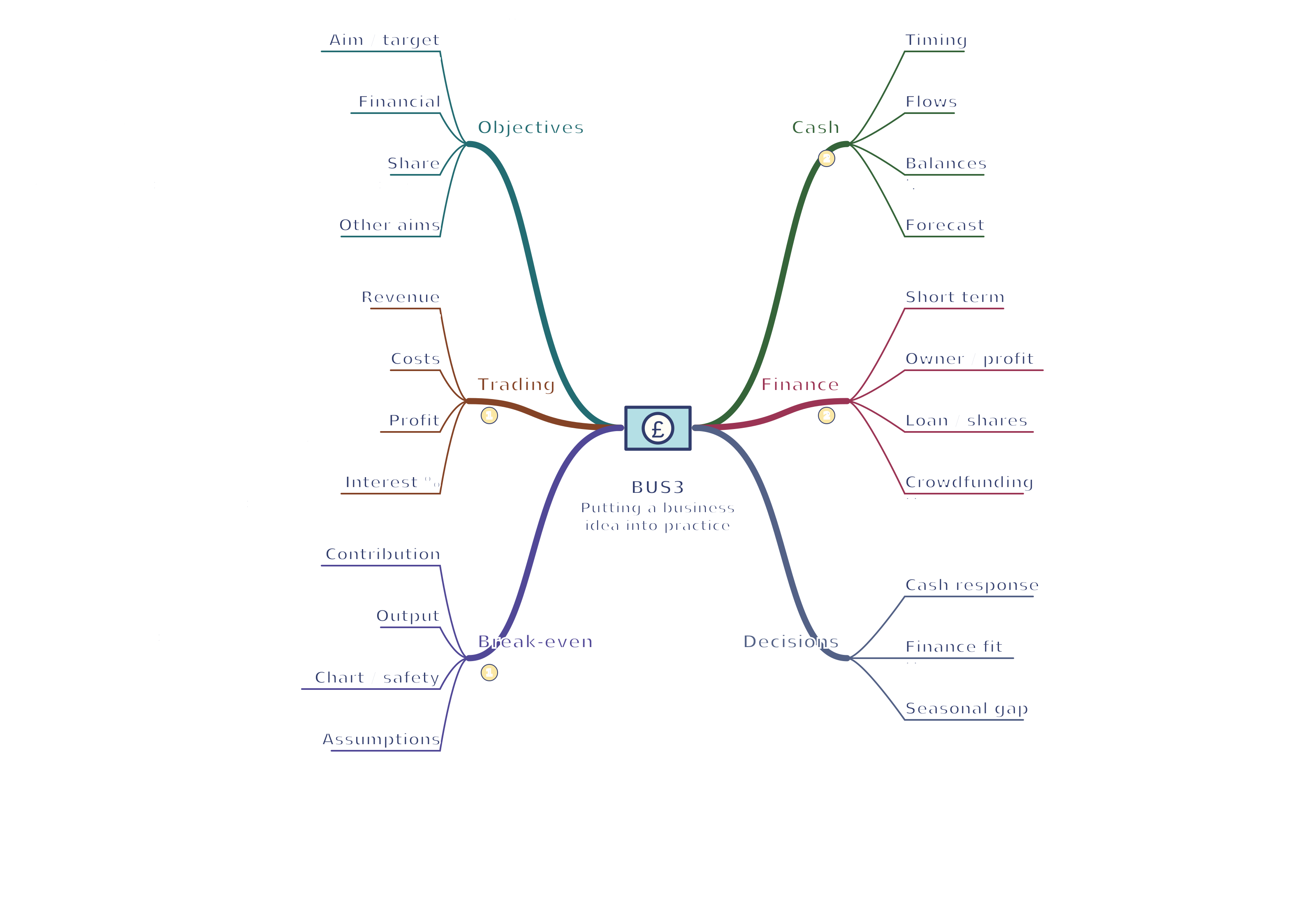
Objectives, revenue, costs, profit, break-even, cash flow and finance.
Notes and quizzes ready · 40 questions ready · Revision video ready.
Revise the key ideas
1.3.1 · Business aims and objectives
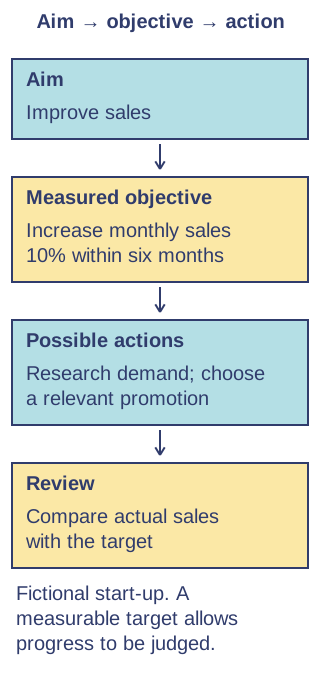
An aim is a broad intention; an objective is a more specific target used to guide decisions and judge progress. “Increase monthly sales by 10% within six months” is more measurable than “do well”.
Financial objectives include survival, profit, sales, market share and financial security. A new business may prioritise paying bills before attempting rapid growth.
Market share (%) = business salestotal market sales × 100. Use comparable sales measures and the same period for the business and the whole market.
Non-financial objectives include social benefit, personal satisfaction, challenge, independence and control. A social enterprise may use profits to support its purpose rather than maximise owners' income.
Objectives differ with the owner's priorities, size, resources and market conditions. A start-up with scarce cash may choose survival; an established profitable business may choose expansion.
Objectives can conflict: improving quality may raise costs, while expanding quickly can put independence at risk if investors gain influence.
Worked example: a business sells £24,000 in a market worth £300,000. Market share = 24,000300,000 × 100 = 8%. A rising sales figure does not ensure rising share if the market grows faster.
1.3.2 · Revenue, costs, profit and interest
Revenue is income from sales. Revenue = selling price × quantity sold. Use the actual price after discounts; revenue is not profit.
Fixed costs do not change with output within the relevant period and range, such as monthly rent. Fixed does not mean the amount can never change.
Variable costs change as output changes, such as ingredients or packaging. Total variable cost = variable cost per unit × quantity produced.
Total costs = total fixed costs + total variable costs. Compare revenue and costs for the same time period and state any assumption about output and sales.
Profit = revenue − total costs. A negative result is a loss. Higher revenue can coincide with lower profit if costs increase faster.
Worked example: a stall sells 400 meals at £8 each. Variable cost is £3 per meal and fixed costs are £1,000. Revenue = £3,200; variable costs = £1,200; total costs = £2,200; profit = £1,000.
Interest is the cost of borrowing. For the stated repayment period, interest (%) = total repayment − amount borrowedamount borrowed × 100. Do not call a multi-year total percentage an annual rate.
Worked example: borrowing £2,000 and repaying £2,160 after one year means £160 interest. Interest percentage = 1602,000 × 100 = 8%, assuming these repayments contain no separate fees.
1.3.2 · Break-even and margin of safety
Break-even is the output at which total revenue equals total costs: there is neither profit nor loss. Contribution per unit = selling price − variable cost per unit.
Break-even output in units = fixed costsselling price − variable cost per unit. If contribution is zero or negative, extra sales do not cover fixed costs under this model.
For indivisible units, round a fractional result up to find the first whole-unit output that covers all costs. State the unit: products, tickets or another quantity, not pounds.
Break-even sales revenue = break-even units × selling price. Margin of safety = actual or budgeted sales units − break-even sales units.
Worked example: using the meal stall's £1,000 fixed costs and £5 contribution, break-even = 1,000 ÷ 5 = 200 meals. At 400 meals, margin of safety = 400 − 200 = 200 meals.
A break-even chart has output on the horizontal axis and money on the vertical axis. The revenue and total-cost lines intersect at break-even; below that output the business makes a loss. Meal stall break-even chart
With other values unchanged, higher fixed costs or variable cost per unit raise break-even output. A higher selling price lowers it, but the price rise may reduce demand.
The chart assumes constant price and variable cost per unit, fixed costs within a range and sales of the output shown. Bulk discounts, unsold stock or limited capacity make actual results less predictable.
1.3.3 · Cash and cash-flow forecasts
Cash is money available to make payments. Suppliers, rent and employees must be paid when due; insufficient cash can cause insolvency even when the business reports a profit.
Profit and cash differ. A credit sale may create revenue before the customer pays; a loan brings cash into the business but is not sales revenue or profit.
Cash inflows include receipts from customers, finance received and asset sales. Cash outflows include payments to suppliers, wages, equipment and loan repayments.
Net cash flow = cash inflows − cash outflows in the period. Closing balance = opening balance + net cash flow. The next period's opening balance is the previous closing balance.
Worked example: opening cash £1,200, inflows £3,000 and outflows £3,500 give net cash flow −£500 and closing cash £700. Negative net flow does not automatically mean a negative closing balance. From opening to closing cash
A cash-flow forecast estimates future receipts and payments, helping identify when finance is needed. It is a prediction, not a record of certain future outcomes.
Seasonal demand, late customer payments or unexpected repairs can change the forecast. Compare actual cash with the forecast and investigate significant differences.
Possible responses include chasing overdue payments, negotiating later supplier payments, delaying non-essential spending or arranging suitable finance. Each has consequences, such as damaged supplier trust or borrowing costs.
1.3.4 · Sources of finance
Choose finance by amount, purpose, repayment period, cost, risk and effect on ownership. A source suited to covering a temporary cash gap may be unsuitable for buying long-lived equipment.
An overdraft allows a bank balance to fall below zero up to an agreed limit. It is flexible for short-term gaps but can involve interest, fees and withdrawal or review by the bank.
Trade credit lets the business receive supplies and pay later. It helps cash timing but is not free cash; late payment can harm relationships or lose credit facilities.
Personal savings avoid interest and outside control but put the owner's money at risk and may be insufficient. They are not available equally to every entrepreneur.
A loan provides borrowed capital with agreed repayments and interest. Ownership is retained, but repayments create cash outflows even when sales disappoint.
Venture capital involves investment, often in exchange for ownership. Investors can bring expertise but may seek strong growth and influence over decisions.
Share capital is money raised by selling ownership shares in a company. It does not require loan repayments, but ownership and potential profits are shared.
Retained profit is profit kept in the business. It avoids new borrowing or dilution, but a new business may have none and an established business may have other uses for it.
Crowdfunding raises contributions from many people through a platform. It can test interest, but success is uncertain and fees or obligations depend on whether funding involves rewards, loans or equity.
Fictional decision: a seasonal shop needs £2,000 for a one-month cash gap. An agreed overdraft may fit better than selling shares permanently, provided later receipts can repay it and fees are affordable.
Test yourself
40 questions · Random sets of 10. Type numerical answers without currency or percentage symbols unless instructed. These quick checks support revision; practise extended explanations and justified judgements too.
Watch BUS3 · Putting a business idea into practice
Revise putting a business idea into practice with this narrated video. Use the player controls to pause, seek, adjust the volume or mute. Turn English captions on or off using the captions menu.
 Mr Kidman's Classroom