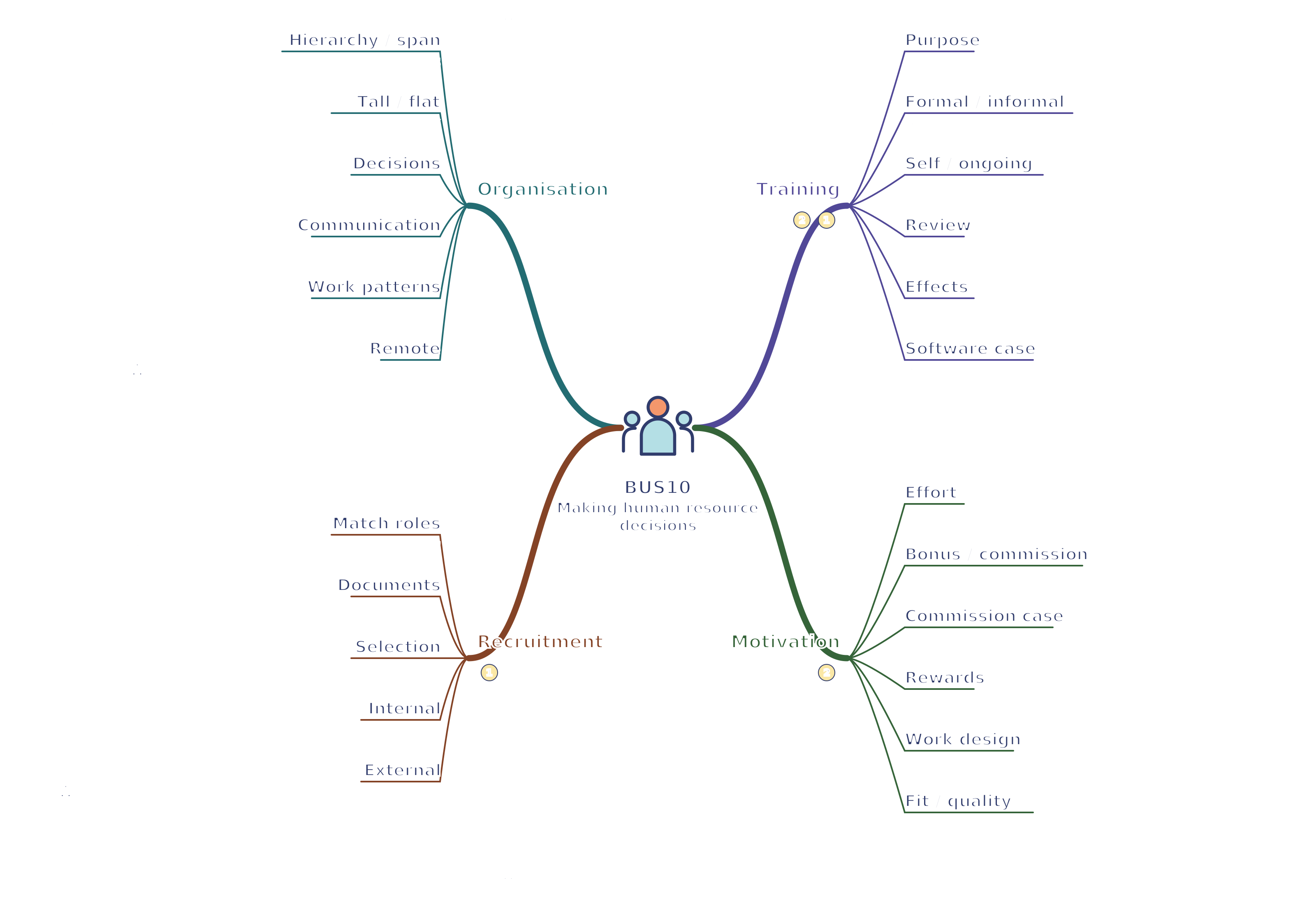
Structures, communication, working patterns, recruitment, training and motivation.
Notes and quizzes ready · 40 questions ready · Revision video ready.
Revise the key ideas
2.5.1 · Organisational structures
An organisational structure sets out roles, authority and reporting relationships. A hierarchy has levels of authority; a chain of command is the route through which authority passes.
Span of control is the number of employees a manager directly supervises. It is not the number of levels in the hierarchy or everyone below that manager.
A hierarchical or tall structure has relatively many levels and often narrower spans. It can offer close supervision and promotion routes but add management cost and slow communication.
A flat structure has fewer levels and often wider spans. It can shorten communication and give employees responsibility, but managers may be overloaded and staff may need more independence. A simple reporting structure
Centralised decision making keeps authority near the top. It can support consistency and control but may respond slowly to local needs.
Decentralised decision making delegates more authority to lower levels or local units. It can improve responsiveness and motivation but requires capable staff and can create inconsistent decisions.
Structure and decision making are related but distinct: fewer levels do not automatically mean all decisions are decentralised. The appropriate choice depends on size, skills, risk and need for consistency.
Communication coordinates work and clarifies expectations. Too little can cause errors; excessive messages or meetings can waste time and obscure priorities.
Barriers include unclear language, unsuitable channels, poor listening, information overload and distance between departments. Choose the channel and level of detail for the task and recipient.
Part-time and full-time describe working hours. Flexible hours vary when work takes place, helping some employees balance commitments but requiring coverage and coordination.
Permanent employment is intended to continue; temporary contracts have a limited period or purpose. Freelancers provide work on a contract basis rather than being ordinary permanent employees.
Remote working uses technology to work away from a usual workplace. It can widen recruitment and reduce commuting, but communication, supervision, equipment and the nature of the role affect its suitability.
Fictional judgement: a growing chain may delegate local stock decisions to store managers but retain central brand standards. This can improve local responsiveness while protecting a consistent customer experience.
2.5.2 · Effective recruitment
Recruitment identifies and selects people to fill roles. Effective recruitment matches skills and experience to business needs, reducing unsuitable appointments and later retraining costs.
Directors guide strategic decisions; senior managers turn strategy into plans; supervisors or team leaders coordinate day-to-day work. Operational staff deliver goods or services, while support staff help functions such as finance or administration.
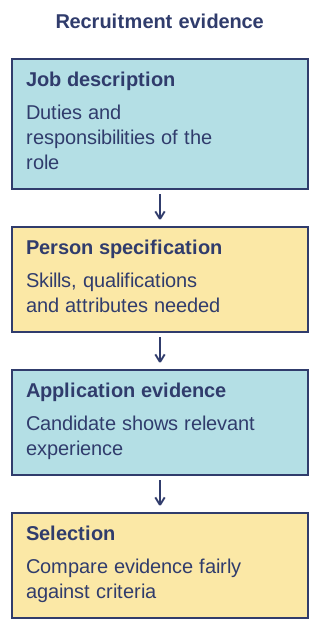
A job description states duties, responsibilities and key features of the role. A person specification sets out the skills, qualifications and attributes needed to do it.
An application form gathers information in a consistent format. A CV summarises an applicant's experience and qualifications; selection may also use interviews or suitable work-related tasks.
Internal recruitment fills a vacancy from existing staff. The business already knows candidates and may spend less on advertising, while promotion can motivate employees.
Internal recruitment offers a smaller candidate pool and can leave another vacancy. It may not bring the new skills needed for a different market or technology.
External recruitment seeks people outside the business. It can bring new ideas and a wider range of skills, but advertising, selection and induction cost time and money.
Selection should use appropriate criteria and fair procedures. The cheapest or fastest recruitment method is not necessarily best if it produces a poor match.
Fictional case: a shop recruiting an experienced online-sales manager may need external applicants if no current employee has the skills. An internal appointment could be quicker but require substantial development.
2.5.3 · Training and development
Training develops skills for current work; development can prepare employees for future responsibilities. Both can improve performance when they address a genuine business need.
Formal training is structured, such as a planned course. It can teach consistent specialist skills but may involve fees, travel or time away from productive work.
Informal training includes coaching or learning from colleagues during work. It can be practical and less costly, but quality depends on the trainer and incorrect habits may spread.
Self-learning through suitable resources allows employees to work at their own pace. They need time, motivation and reliable material; completion alone does not prove competence.
Ongoing training keeps employees' skills current as tasks, products or technology change. Existing employees as well as new recruits may need training.
Target setting and performance reviews identify needs, discuss progress and agree development. Targets should be meaningful and achievable, with support rather than only pressure.
Training can improve quality and productivity, reduce errors and increase confidence and motivation. It can also help retention when employees see opportunities to progress.
Retraining supports new technology but costs time before full benefits occur. Trained employees may leave; compare that risk with the harm of leaving staff unable to use the system effectively.
Fictional chain: a warehouse trains staff on new stock software → records become more accurate → fewer orders are delayed → customer satisfaction may improve, provided the software and procedures also work reliably.
2.5.4 · Motivation
Motivation is the willingness to put effort into work. It can help attract and retain staff, improve productivity and reduce mistakes, although tools, training and conditions also affect performance.
Remuneration is payment for work, such as wages or salary. Competitive pay can attract employees, but higher pay alone may not solve poor management or an unsafe workplace.
A bonus is an additional payment, often linked to targets. It may encourage effort but can promote short-term quantity at the expense of quality if targets are poorly chosen.
Commission links pay to sales, often as a percentage. It can encourage selling but make income uncertain or tempt staff to recommend unsuitable products.
Worked example: a salesperson earns 4% commission on £5,000 sales. Commission = 0.04 × £5,000 = £200. Add any stated basic pay separately.
Promotion offers a more senior role or greater responsibility and often higher pay. It can encourage development, but limited promotion opportunities may reduce its impact.
Fringe benefits are benefits in addition to pay, such as a staff discount or company car. Their value differs between employees and they create a cost for the employer.
Job rotation moves employees between tasks, reducing repetition and building flexibility. It needs training and may not motivate someone who dislikes the alternative tasks.
Job enrichment adds meaningful responsibility or challenge. It differs from merely adding more of the same task, and employees need suitable skills and support.
Autonomy gives employees discretion over how they work. It can improve satisfaction and initiative but needs clear goals, trust and appropriate limits.
Motivation methods should fit the role and employee needs. A sales commission may suit measurable individual sales better than a team role where cooperation and safety are central.
Fictional judgement: a restaurant could reward low complaint levels rather than speed alone. Combining recognition, training and fair pay may improve service more sustainably than a bonus that encourages rushed work.
Test yourself
40 questions · Random sets of 10. Type numerical answers without currency or percentage symbols unless instructed. These quick checks support revision; practise extended explanations and justified judgements too.
Watch BUS10 · Making human resource decisions
Revise making human resource decisions with this narrated video. Use the player controls to pause, seek, adjust the volume or mute. Turn English captions on or off using the captions menu.
 Mr Kidman's Classroom